
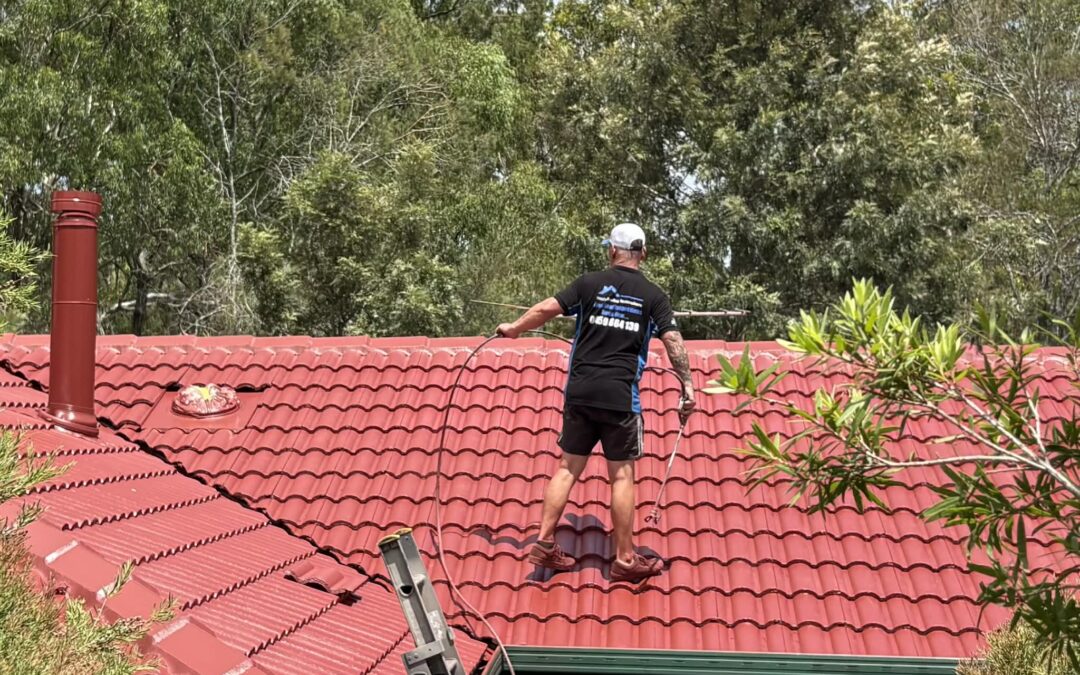
Restoring the roof of an established home on a suburban block and restoring the roof of an older or rural property can present very different challenges.
Across Boonah and the surrounding Scenic Rim, properties can be exposed to open weather, mature trees, debris, long periods of strong sunlight and the maintenance challenges that naturally come with older buildings.
For property owners considering roof restorations in Boonah, understanding these differences is important when deciding how an ageing roof should be maintained.
Rural Roofs Can Experience Greater Exposure
A suburban house may be surrounded by neighbouring homes, fences and other structures.
A rural or semi-rural property can be much more exposed.
Depending on its position, a house may receive relatively little protection from strong winds and driving rain.
The roof may also have large areas exposed to direct sunlight throughout the day.
This doesn’t mean rural roofs automatically deteriorate faster, but their environment needs to be considered when assessing their condition.
Mature Trees Can Be Both an Asset and a Roofing Problem
Large established trees are one of the attractions of many Scenic Rim properties.
They can also create additional roof maintenance.
Leaves, twigs and organic debris can accumulate around:
- Roof valleys
- Gutters
- Downpipes
- Flashings
- Roof penetrations
Tree coverage can also shade sections of a roof.
That means one side of the roof may remain damp for longer after rain than an area receiving direct sunlight.
Over time, different sections of the same roof can therefore develop noticeably different levels of staining, moss or lichen growth.
Why Roof Valleys Deserve Particular Attention
Roof valleys carry significant quantities of rainwater.
They are also natural collection points for leaves and debris.
On properties surrounded by trees, keeping these areas clear becomes particularly important.
Debris can interfere with normal water movement and retain moisture.
When assessing an older roof, valleys should therefore be inspected rather than simply pressure cleaning the visible open sections of the roof.
Older Homes Need Individual Assessment
Boonah and the wider Scenic Rim contain properties from many different periods.
An older home may have undergone numerous repairs, extensions and alterations during its lifetime.
The roof you see today may not necessarily be exactly the roof originally installed when the house was built.
There may be:
- Different generations of roofing material
- Previous repairs
- Extensions with different roof pitches
- Replaced sections
- Old and newer flashings
- Previous coatings
- Added skylights or roof penetrations
This history can affect how restoration work should be approached.
Previous Roof Restorations Matter
A roof may already have been restored once or even multiple times.
Before applying another coating or carrying out extensive restoration work, it is useful to understand the condition of the existing surface.
A roof that has previously been coated should be assessed for adhesion, deterioration and compatibility with any proposed new system.
Simply applying another layer because the existing colour has faded isn’t necessarily the correct approach.
Preparation is a major part of successful restoration.
Pressure Cleaning Is Preparation, Not the Entire Restoration
One of the most visually dramatic parts of restoring an older tiled roof is cleaning.
Years of accumulated dirt and organic growth can make the difference between the cleaned and uncleaned surface remarkable.
But cleaning shouldn’t be confused with restoration itself.
Once the roof has been cleaned, previously hidden defects may become easier to identify.
These can include:
- Cracked tiles
- Deteriorated pointing
- Previous repairs
- Surface deterioration
- Problems around penetrations
- Damaged ridge areas
Cleaning therefore prepares the roof for assessment and subsequent work.
Ridge Capping on Older Tiled Roofs
Ridge capping forms the lines running along the peaks and hips of many tiled roofs.
The materials associated with these areas can deteriorate with age and weather exposure.
Cracking or deterioration around ridge areas deserves attention during restoration because roof restoration should address functional defects rather than concentrating solely on appearance.
A roof that has simply been cleaned and painted without appropriate repairs underneath hasn’t necessarily had the issues responsible for deterioration addressed.
What About Sheds, Garages and Outbuildings?
Another difference with rural and semi-rural properties is the number of structures that may be present.
A property might include:
- The main residence
- Detached garage
- Workshop
- Large shed
- Carport
- Verandah
- Additional accommodation
These structures may use completely different roofing materials and may have been built decades apart.
They shouldn’t automatically be treated as one roofing project.
Each structure may require its own assessment and maintenance approach.
Storms Can Reveal Existing Weaknesses
Strong weather doesn’t always create a roofing problem from scratch.
Sometimes it exposes a weakness that already existed.
A damaged tile, deteriorated flashing or ageing roof component may have caused no obvious internal problem during ordinary rainfall but become apparent during more severe weather.
After significant storms, inspecting older roofing systems can therefore be worthwhile even when catastrophic damage isn’t immediately visible.
Maintaining the Character of an Older Property
The roof plays a major role in the visual character of an established home.
This can be particularly noticeable on rural properties where the house may be viewed from a greater distance and the entire roofline is visible.
Restoring an ageing roof can significantly improve the appearance of the property without necessarily changing its overall character.
Colour selection and the existing architectural style should therefore be considered as part of the project rather than treating the roof as an isolated surface.
Roof Restorations Boonah and the Scenic Rim
Roofs around Boonah can face a combination of conditions that aren’t always identical to those experienced by newer suburban homes.
Open exposure, mature vegetation, older construction, previous repairs and additional structures can all influence what a property requires.
For homeowners researching roof restorations Boonah, the most useful starting point is therefore not choosing a colour or deciding whether the roof should be painted.
It is understanding the history and present condition of the roof.
Once that is known, an appropriate plan can be developed — whether that involves maintenance, individual repairs, a complete roof restoration or, where necessary, replacement.